




Losing one or more teeth affects many aspects of daily life: from chewing to the pronunciation of words to the safety of smiling. Today, thanks to dental implants, it is possible to regain function and aesthetics safely and durably, without sacrificing comfort.
In this guide you will find out:
- what are dental implants
- How dental implants are made and how they work
- Why choose dental implants over bridges or removable dentures
- the types of dental implants
- to whom dental implants are suitable
- how the implant pathway unfolds
- How long dental implants last and how to maintain them over time
- risks of dental implants
- The importance of choosing a center with experience in implant dentistry
What are dental implants and why they are a permanent solution
Dental implants are artificial roots inserted into the bone to stably replace one or more missing teeth. A prosthesis is then attached to this base to faithfully reproduce the appearance and function of the natural tooth.
This solution makes it possible to:
- Recover reliable masticatory function
- preserve bone volume over time (in fact, bone tends to resorb in the absence of the tooth)
- achieve a harmonious aesthetic result
These are all features that make implantology a solution designed to last.
How dental implants are made and how they work
To really understand how dental implants work, it is helpful to know their structure and the biological principle that ensures their stability.
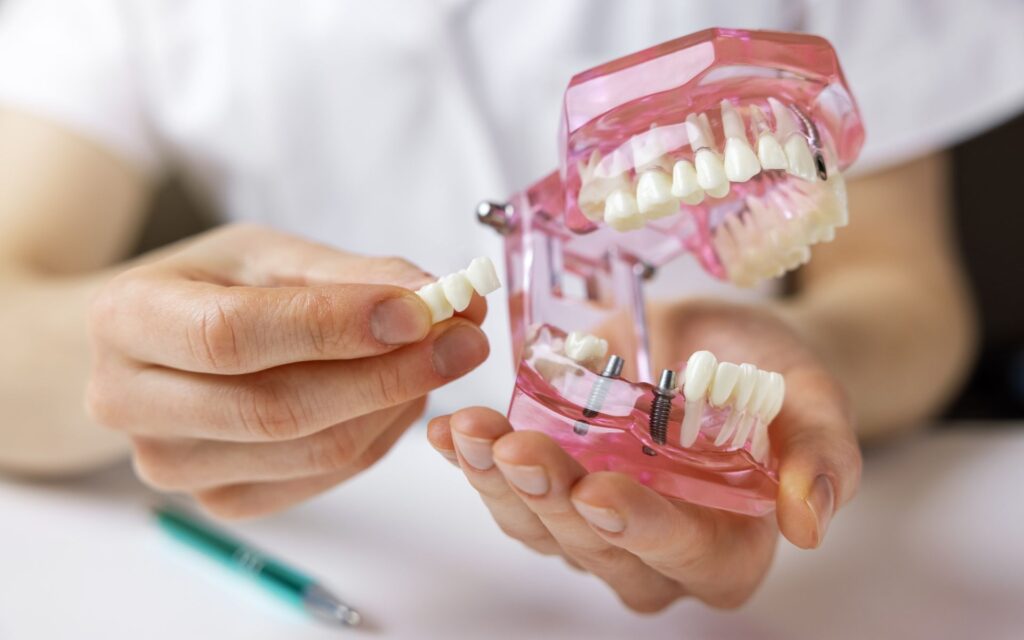
A dental implant consists of three main elements:
- Implant screw, inserted into the maxillary or mandibular bone
- abutment (abutment), which connects the implant to the prosthesis
- Dental crown, the visible part that reproduces the tooth.
The most commonly used material is titanium, chosen for its high biocompatibility. However, for specific esthetic or biological needs, zirconia may be used in some cases.
The stability of the implant is made possible byosseointegration: the bone, in practice, gradually integrates around the screw, making it as solid and strong as a natural root.
Why choose dental implants over bridges or removable dentures
Dental implants do not rest on neighboring teeth and do not require filing, thus preserving healthy teeth. They also offer a feeling very similar to that of natural teeth.
This is an independent, conservative solution that improves mouth function and also contributes to psychological well-being by restoring confidence in the smile.
The types of dental implants
Modern implantology offers different types of dental implants to suit the individual patient’s bone condition, recovery time, lifestyle habits and expectations.
Traditional dental implants (endosseous/deferred load)
In traditional dental implants (endosseous or deferred load), after implant screw placement, time is allowed for the natural osseointegration process. The final prosthesis is applied only after healing (usually 3-6 months).
Immediate load dental implants: fixed teeth quickly
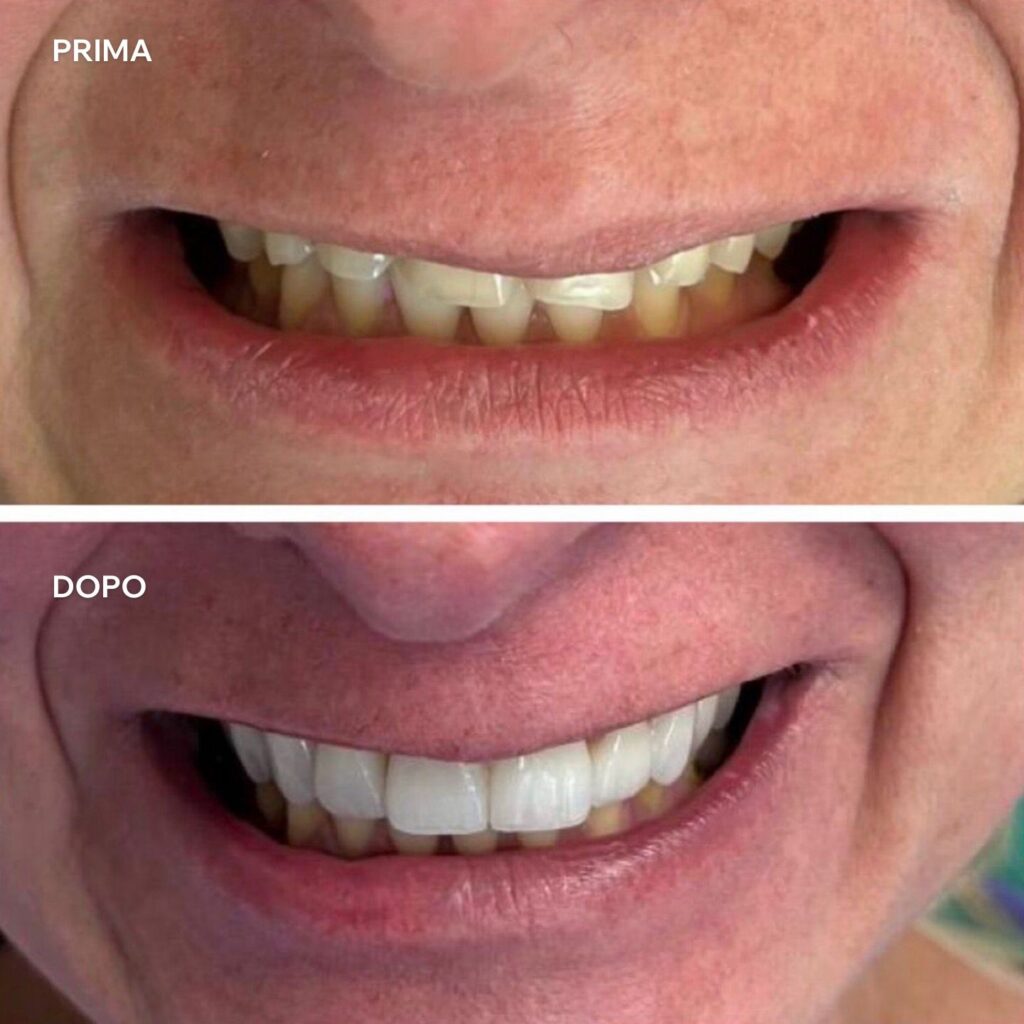
Under certain clinical conditions, it is possible to fit temporary fixed teeth within 6-48 hours after surgery: we are talking about the immediately loaded dental implants. This technique drastically reduces waiting time and avoids the use of temporary removable dentures, but it requires specific requirements and accurate diagnosis.
The Dr. Federico Zanardi, with more than 3,500 implants placed per year, is one of the top experts in Italy for clinical cases treated.
Zygomatic implants: when bone is not enough
In cases of severe bone resorption in the upper jaw, zygomatic implants allow the prosthesis to be anchored to the zygomatic bone, often avoiding more invasive bone regeneration surgeries.
This is an advanced technique reserved for experienced centers such as Centri Dentali Zanardi.
Other types of planting
In special clinical cases, other types of dental implants, such as iuxtaosseous or subperiosteal implants, may also be evaluated. These are alternative solutions used when the amount of available bone is not sufficient for traditional implants: instead of being inserted into the bone, they are placed on its surface, under the gingiva. Their indication is always defined by the dentist within individualized planning.
To whom dental implants are suitable
Dental implants are indicated in most adult patients who wish to replace one or more teeth stably and safely.
In general they require:
- good general health
- healthy gums
- Sufficient or treatable bone quantity and quality.
When a more in-depth assessment is needed
However, some conditions require special attention, such as:
- smoke
- uncontrolled diabetes
- active periodontitis
- Severe untreated bone loss.
Indeed, in these cases, the experienced dentist can propose preparatory treatments or alternative solutions to increase the safety of the outcome.
How the implant pathway unfolds
The course of implantology follows precise steps designed to ensure safety and lasting results:
- specialist examination and diagnosis(Cone Beam CT scan)
- customized planning
- implant placement
- healing and osseointegration
- application of the final prosthesis
- convalescence period.
The procedure is performed under local anesthesia and, thanks to modern techniques, is generally well tolerated.
Conscious sedation: experiencing implant surgery with peace of mind
For more anxious patients, it is possible to use conscious sedation, managed by the anesthesiologist or experienced dentist. This anesthesia technique helps to experience the session in a relaxed manner, reducing stress and perception of discomfort, while remaining alert and cooperative.
How long dental implants last and how to maintain them over time
With proper management, a dental implant can last more than 20 years.
It is crucial, however:
- Follow proper daily oral hygiene
- Undergo periodic checkups and professional oral hygiene sessions
Prevention is the true ally of implant longevity.
Risks of dental implants: what to know
Like any medical treatment, implantology can present risks, which are generally rare and limited. Today, however, careful digital planning and the use of modern techniques make it possible to significantly reduce the possibility of complications, which in most cases can still be prevented or effectively managed through regular checkups and timely intervention.
Why choosing a Center with experience in dental implants makes a difference
The success of a dental implant depends largely on the expert’s clinical experience and an accurate, individualized diagnosis.
Every patient is different, as are costs, time, and number of sessions.
Relying on experienced implant dentistry professionals means receiving a tailored treatment plan and facing the journey with greater peace of mind.
Book an evaluation to see if implant dentistry is the right solution for you.