



Dental malocclusion, or misalignment between the arches when closing the mouth, is a widespread condition that can affect children, adolescents, and adults. It is often detected during a routine checkup, but sometimes it can be noticed by paying attention to certain signs, such as jaw discomfort or difficulty chewing.
Today it can be treated with effective solutions at any age: intervening early helps prevent progressive disorders and improve both chewing function andsmile aesthetics.
Let’s look in detail at what dental malocclusion is, what causes it, the most common symptoms, possible consequences, remedies and treatments available.
What is dental malocclusion
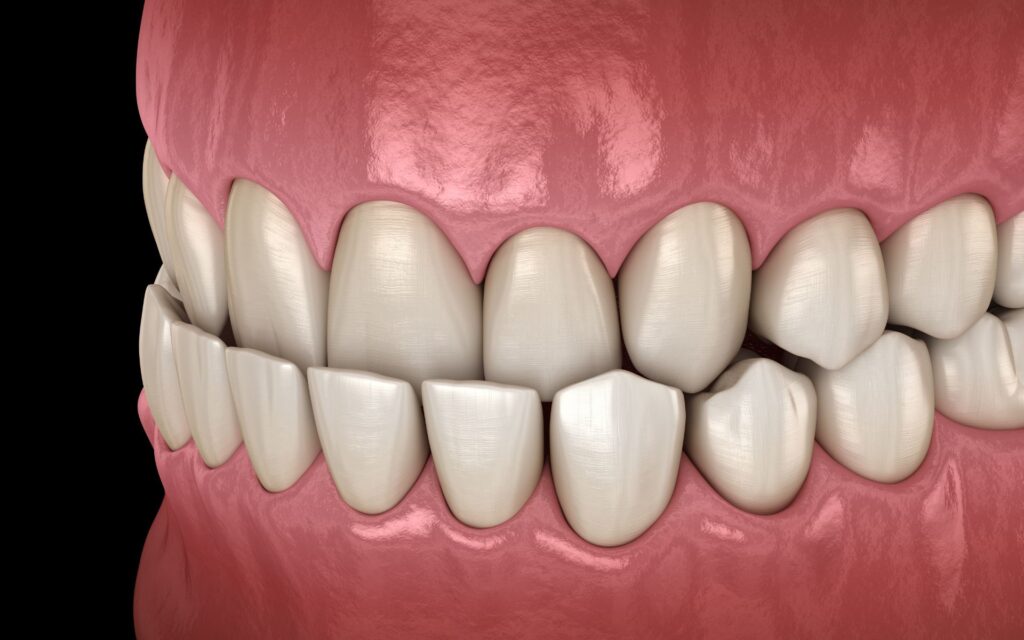
Dental malocclusion is defined as analteration in the correct relationship between the upper and lower jaws when the mouth is closed.
In an ideal situation, the upper teeth overlap harmoniously with the lower teeth, allowing for stable and balanced chewing. However, when this balance is lacking, teeth and jaw bones do not match properly.
The misalignment may concern:
- teeth, such as in crowding, excessive spaces, or rotation
- Bone bases, when the maxilla or mandible are too far forward or backward (conditions commonly known as “backward chin” or “prominent jaw”)
- both aspects, with associated dental and skeletal components.
Thus, malocclusion can be dental, skeletal, or mixed in origin.
The main types of malocclusion
Malocclusions are classified according to the relationship between the arches:
- Class 1: Correct arch relationship but with dental misalignment or crowding.
- Class 2: upper arch more advanced than the mandible (often associated with receding chin).
- Class 3: mandible more advanced than the upper jaw (“reverse bite”).
These are then joined by bite-specific alterations:
- Deep bite: excessive coverage of the lower teeth by the upper teeth.
- Open bite: lack of contact between the front or back teeth.
- Crossbite: one or more upper teeth close within the lower arch.
Each type has specific characteristics and requires targeted orthodontic evaluation.
The causes of dental malocclusion: what it depends on
The causes of dental malocclusion are often multifactorial.
Among the most common:
- genetic predisposition
- Prolonged infant habits (pacifier, thumb sucking)
- Bruxism, which is the involuntary grinding of teeth, especially during sleep
- early loss of milk teeth
- Included teeth or marked crowding
- trauma or changes in bone growth
- Previous dental therapies not adequately planned
Early diagnosis makes it possible to choose the most appropriate time to intervene.
Symptoms of dental malocclusion: the signs not to ignore
Symptoms of dental malocclusion can appear progressively and affect not only the teeth and mouth, but also other areas of the body.
Among the most frequent signs:
- difficulty in chewing, swallowing or breathing
- Recurrent jaw, head and neck pain
- tension in the temporomandibular joint (TMJ)
- fatigue of facial muscles
- cervical disorders or postural alterations
Irregular tooth wear and noticeable changes in smile aesthetics may also appear in some cases, possibly affecting self-esteem, especially in adolescents.
A specialist examination allows you to check whether these symptoms are related to a dental malocclusion.
The consequences of untreated dental malocclusion
The consequences of dental malocclusion can affect oral health and overall well-being over time.
In fact, an altered distribution of masticatory forces can promote:
- Early deterioration of teeth and increased risk of fractures
- overload of the mandibular joint
- Difficulty in oral hygiene with increased tooth decay and gum inflammation
- Impacts on posture, muscle balance, and quality of rest
- Aesthetic impact with possible effects on facial profile
Restoring proper occlusal balance means protecting teeth, joints and quality of life.
Treatments and possible remedies for dental malocclusion
Treatments for dental malocclusion vary according to the type of alteration and the patient’s growth stage. There is no standard solution; each course must be individualized.
Traditional orthodontic appliances
The traditional orthodontic appliances are indicated in cases requiring complex tooth movement or growth guidance in children. They can be fixed or removable and improve alignment and chewing function.
Transparent dental aligners
The clear aligners are custom-made templates that progressively move teeth to the correct position. They represent a discreet and comfortable solution that is particularly popular with adults.
Other remedies and treatment approaches for dental malocclusion
Possible remedies for dental malocclusion also include:
- interceptive therapies in developmental age
- splints for the management of bruxism
- Orthognathic surgery in cases of major skeletal misalignment
- Multidisciplinary pathways with speech therapist or postural specialists
The timing of intervention is a determining factor in achieving stable results over time.
Diagnosis of dental malocclusion: how the evaluation takes place
The diagnosis of malocclusions is based on a thorough orthodontic examination, during which the relationship between the arches and chewing function are analyzed.
Examinations such as digital dental impressions, X-rays, or Cone Beam CT scans may be required, which are useful for accurately analyzing bone structure and tooth position.
The treatment plan is then determined according to the patient’s age and functional and aesthetic goals.
How we treat dental malocclusions at Centri Dentali Zanardi
At Centri Dentali Zanardi, treatment of dental malocclusion is based on accurate diagnosis using the latest technology and tailored pathways.
We follow children and adults with a multidisciplinary approach, paying attention to both the function andaesthetics of the smile.
Assessing arch alignment early on means taking care of oral and general well-being.
Book a specialist visit to receive a personalized evaluation.