




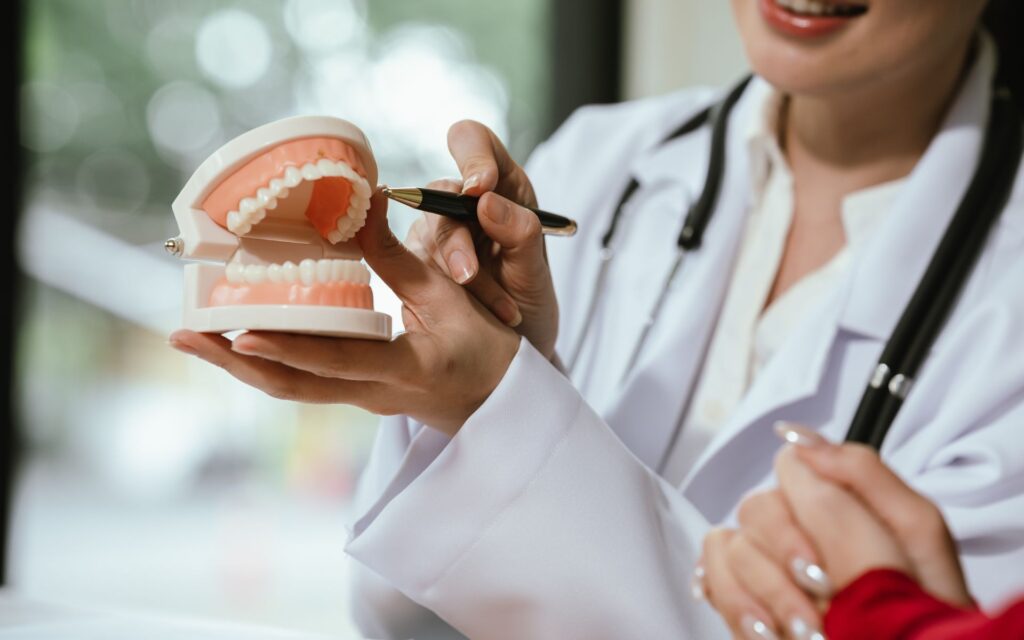
Crowns, bridges, and implant-supported dentures are the main types of fixed dental prostheses available in dentistry today. These solutions provide a permanent replacement for one or more missing teeth and restore both chewing function and aesthetics.
Losing one or more teeth does not necessarily mean you have to resort to removable dentures. Thanks to modern technology, it is now possible to create dental prostheses that are increasingly precise, customized, and natural-looking.
Fixed Dental Prosthetics: What Are They?
Fixed dental prostheses are devices that are permanently attached to natural teeth or implants. Unlike removable prostheses, they cannot be removed by the patient on their own.
They can be used both to replace one or more missing teeth and to restore severely damaged teeth.
Types of Fixed Dental Prosthetics: Crowns, Bridges, and Implant-Supported Prosthetics
The choice of the most suitable fixed dental prosthesis depends on:
- based on the number of teeth to be replaced
- based on the condition of the mouth
- based on the objectives to be achieved.
Here are the most widely used technologies today.
Dental crown (or cap)
A dental crown is used when the tooth’s root is still healthy and stable, but the visible portion is severely damaged by deep cavities, fractures, or as a result of a root canal. The crown completely covers the damaged tooth and protects it from future fractures, restoring its original shape.
Dental bridge
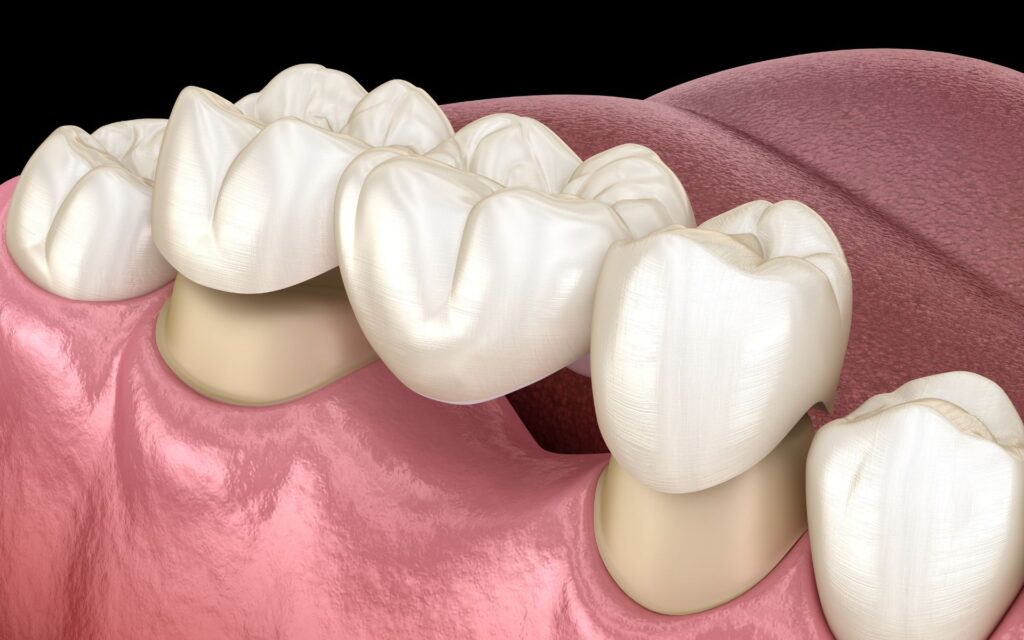
This option allows you to replace one or more consecutive missing teeth. The bridge is supported by the teeth adjacent to the gap (known as “abutment teeth”), which are appropriately shaped and crowned to serve as supports for the bridge.
This solution is recommended in cases where it is necessary to restore small edentulous spaces, in order to restore the continuity of the smile and chewing function.
Fixed Implant-Supported Prosthesis
When a tooth is missing, one of the most common solutions is a fixed prosthesis supported by implants. Titanium implants are placed in the bone to replace the root of the natural tooth; either a single crown or a complete fixed prosthesis can then be anchored to them.
Where the biological stability requirements are met, it is possible to use immediate loadingby placing the temporary fixed prosthesis within 6–48 hours of surgery .
In what cases are fixed dental prostheses recommended?
Fixed dentures are recommended for a variety of cases:
- A tooth is severely damaged but can still be saved
- One or more teeth are missing
- An entire archway needs to be restored
- You want a more stable and comfortable solution than a removable denture.
Before choosing a fixed implant-supported prosthesis, it is always necessary to verify that the appropriate clinical conditions are present, particularly sufficient bone volume to ensure the stability of the implant.
During the visit, any general health conditions and risk factors—such as smoking, bruxism, certain systemic diseases, or the use of specific medications—are also taken into account.
When is it possible to get a fixed prosthesis in just a few hours?
For those who need to replace one or more teeth, one of the biggest concerns is the duration of the restoration process. In certain cases, however, it is possible to place a fixed temporary prosthesis within hours of implant placement, thanks toimmediate-load implantology.
This protocol allows you to:
- quickly restore appearance and functionality
- Avoid using a removable denture during the healing phase.
Immediate loading, however, is not suitable for all patients. The feasibility of using this technique depends on several factors, including the quantity and quality of available bone, the primary stability of the implants, and, as always, the clinical evaluation performed by the specialist.
Technologies that make fixed dental prostheses increasingly precise and comfortable
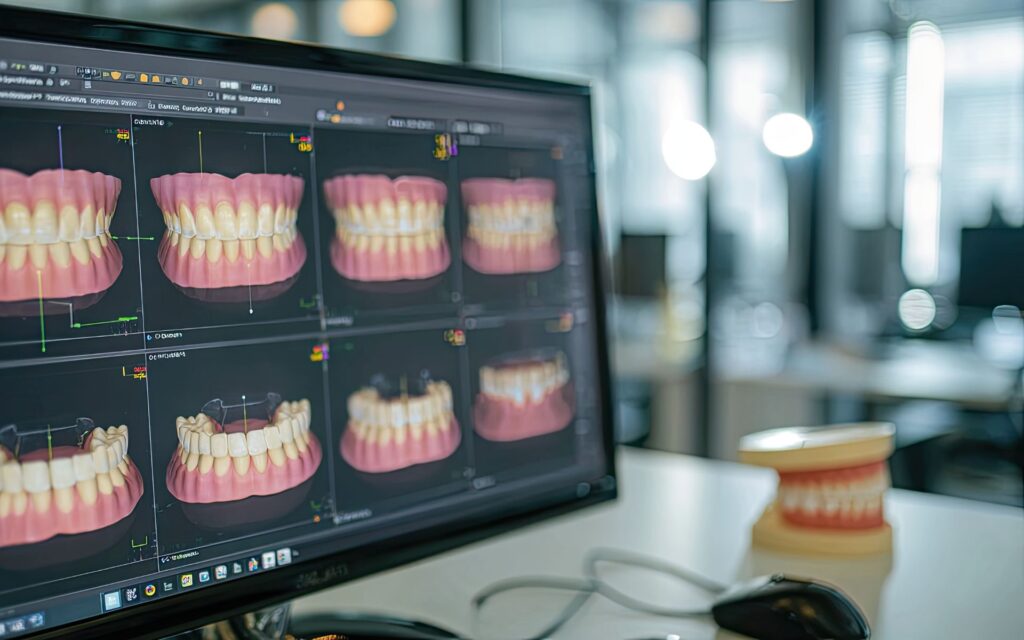
Today, fixed dental prostheses are designed and fabricated using digital technologies that improve the precision, comfort, and predictability of treatment. Tools such as digital smile design, 3D diagnostics, and intraoral scanners—along with state-of-the-art materials—make it possible to achieve increasingly personalized and natural-looking restorations.
Digital Smile Design
Using 3D simulation software, the dentist designs the shape and position of the future teeth to harmonize with the patient’s facial features. This planning allows the dentist to simulate the final result and makes the treatment more predictable.
Three-Dimensional Diagnostics
Thanks to the Cone Beam CT It is possible to obtain three-dimensional images of the bone and anatomical structures of the mouth. This information helps the dentist precisely plan any implant placement and design a safer restoration.
Intraoral Scanners and Digital Impressions
This three-dimensional optical instrument allows for the acquisitionof a digital impression of the mouth without the need for traditional impression materials, which patients often find unpleasant. The scan is extremely accurate and enables the design and fabrication of prostheses with a high degree of fit.
State-of-the-art aesthetic materials
The use of zirconia and all-ceramic materials has replaced the old metal alloys. These materials combine high strength with a very natural appearance, without the metal edges that characterized some dental restorations of the past.
The Advantages of Fixed Dental Prosthetics Over Removable Ones
Fixed dental prostheses can offer several practical benefits in everyday life.
Among the main benefits:
- greater stability while chewing
- High comfort, without the typical movement associated with removable dentures
- a natural and harmonious aesthetic
- more natural pronunciation
- Simple daily care, without having to remove the denture
- In implant-supported prostheses, maintenance of the functional stimulus to the bone, which helps limit its physiological resorption
Removable dentures, however, continue to be a viable solution in specific clinical situations. The choice between a fixed and a removable prosthesis always depends on the dentist’s assessment and the individual patient’s characteristics.
Centri Dentali Zanardi: A Comprehensive Approach, from Diagnosis to Permanent Prosthetics
At Centri Dentali Zanardi, every prosthetic restoration is monitored at every stage, from the initial diagnosis through digital design, to fabrication and follow-up checkups. This allows for coordinated treatment planning, with constant communication between the dentist and the dental laboratory.
Every fixed dental prosthesis is custom-made to suit the patient’s functional and aesthetic needs, with the goal of ensuring stability, comfort, and a harmonious integration with the patient’s smile.
Have you lost one or more teeth and are looking for a stable, natural-looking solution?