




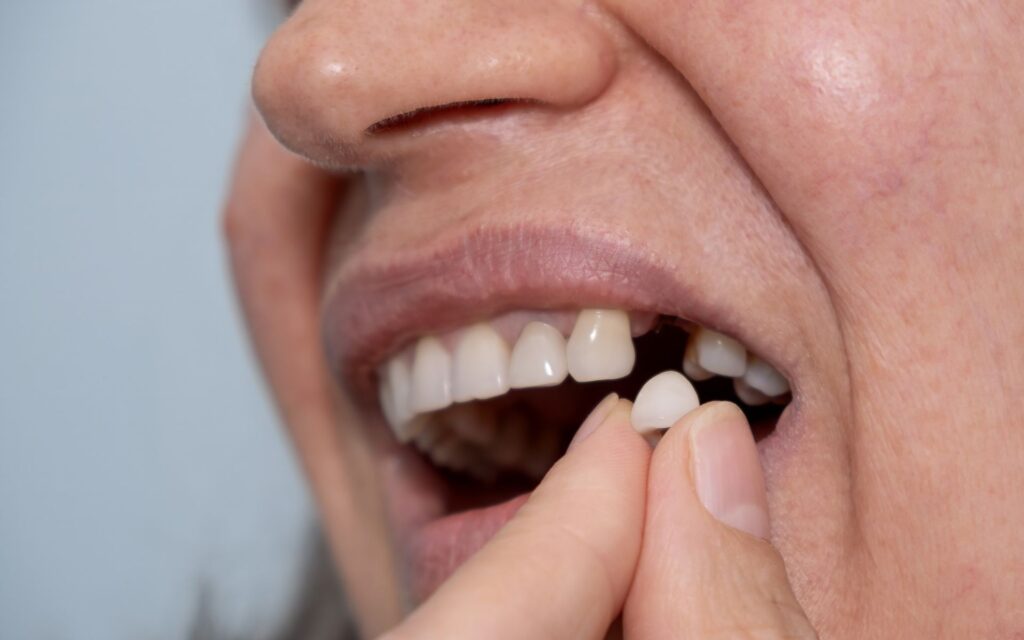
In most cases, teeth do not fall out due to old age, but because of oral health problems that have been neglected for too long. The leading cause in adults is periodontitis, followed by untreated deep cavities and trauma. The most significant risk factors are smoking, uncontrolled diabetes, and poor oral hygiene.
Early diagnosis, professional dental care, and modern implant-based restorative treatments now make it possible to preserve natural teeth as much as possible and, when teeth have already been lost, to restore both chewing function and the aesthetic appearance of the smile.
Why Do Teeth Fall Out? The Most Common Causes in Adults
The loss of a tooth is almost always the result of a process that develops over time and affects either the tooth itself or the structures that support it.
The most common causes are:
- periodontal disease, ranging from early gingivitis to advanced periodontitis
- Deep cavities and endodontic infections
- dental trauma
- risk factors such as smoking, uncontrolled diabetes, bruxism, and poor oral hygiene
Taking action in the early stages usually prevents the damage from becoming irreversible.
The Role of the Gums in Tooth Stability
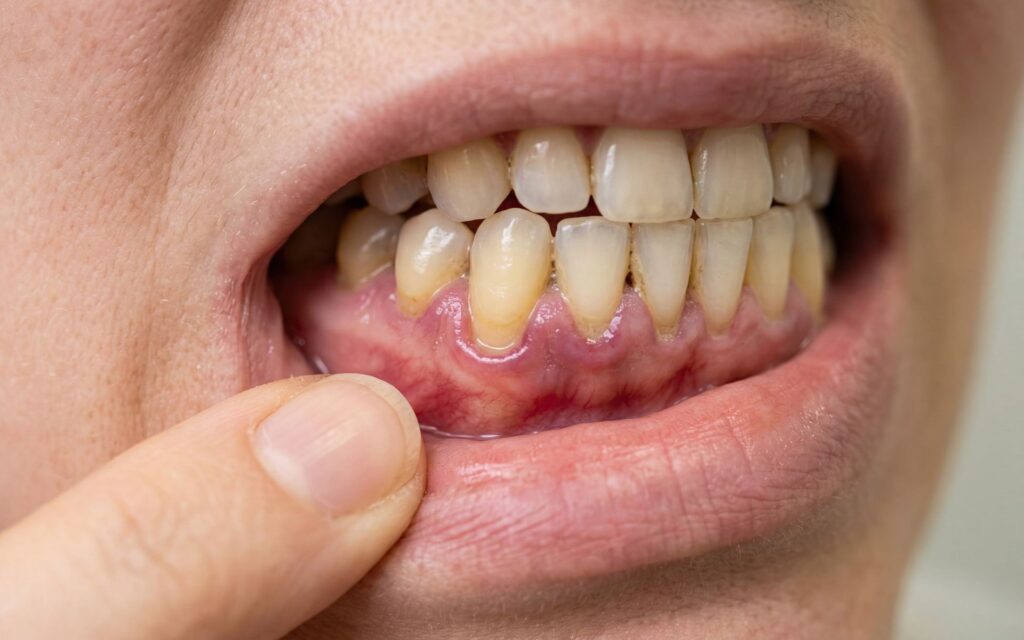
The gums act as a barrier that protects the structures supporting the teeth. When they become inflamed, bacteria gradually reach the deeper tissues and damage them.
Signs that should not be overlooked include:
- Bleeding while brushing
- red or swollen gums
- persistent bad breath
- gum recession that exposes the tooth roots
If the inflammation is left untreated, gingivitis progresses to periodontitis, a condition that also affects the bone and periodontal ligaments.
Periodontitis: The Disease That Most Often Leads to Tooth Loss
Periodontal periodontitis is the leading cause of tooth loss in adults. It is estimated that in Italy it affects about 8 million people, of whom about 3 million have severe cases, with prevalence increasing sharply after age 35.
It is a chronic inflammatory disease that affects the gums, periodontal ligament, and alveolar bone. As bone resorption progresses, the tooth loses its anchorage and becomes increasingly mobile. In advanced stages, the tooth may fall out on its own, or extraction may be necessary.
The risk is not the same for everyone. Smokers are about three times more likely to develop periodontitis, and smoking masks gum bleeding, delaying diagnosis. In patients with uncontrolled diabetes, the risk is about two to three times higher, with a two-way relationship, because periodontitis, in turn, worsens glycemic control.
When a Loose Tooth Can Still Be Saved
A loose tooth does not necessarily mean you will lose it. The chances of saving it depend on how much supporting bone remains and on the cause of the looseness.
- Mild and reversible mobility. When the problem is caused by tissue inflammation, occlusal trauma, or bruxism, periodontal therapy, bite adjustment, and a nighttime mouthguard often restore the tooth’s stability.
- Moderate mobility. In cases of moderate bone loss, the tooth can be preserved through non-surgical or surgical periodontal therapy, splinting of adjacent teeth, and a strict maintenance program.
- Severe mobility issues. When the bone support is extensively compromised and the tooth is also moving vertically, preserving the tooth is no longer feasible, and extraction becomes the best option for protecting the remaining bone in preparation for restoration.
Only an examination that includes X-rays and periodontal probing can determine the extent of the problem. Time is of the essence here: the longer the tooth remains loose and inflamed, the more bone is lost.
Deep Cavities and Infections: When a Tooth Can No Longer Be Saved
Tooth decay is the most common chronic disease in the world, and if not treated in time, it can lead to tooth loss.
As long as the lesion affects only the enamel and superficial dentin, conservative treatments are used. When it reaches the pulp, root canal therapy is performed, which allows the tooth to be preserved in a high percentage of cases. Extraction remains indicated when the remaining tooth structure is no longer sufficient to support a restoration, in the presence of vertical root fractures, or in cases of infections that do not respond to retreatment.
Dental Injuries and Sudden Impacts
Traffic or household accidents, sports injuries, and workplace incidents can cause crown fractures, root fractures, dislocations, or complete avulsion of the tooth.
In cases of trauma, prompt action determines the prognosis. A dislodged permanent tooth can be reimplanted with a good chance of success if it is returned to the socket within 30 minutes; however, the chances of success decline rapidly and become very low after about an hour outside the mouth in a dry environment.
Other factors that increase the risk of losing one or more teeth
Certain conditions and daily habits increase the risk, often by acting in combination with one another:
- poor oral hygiene, with a buildup of plaque and tartar
- smoke
- poorly controlled diabetes
- bruxism and clenching
- a diet high in sugar.
Aging and Teeth: A Myth to Debunk
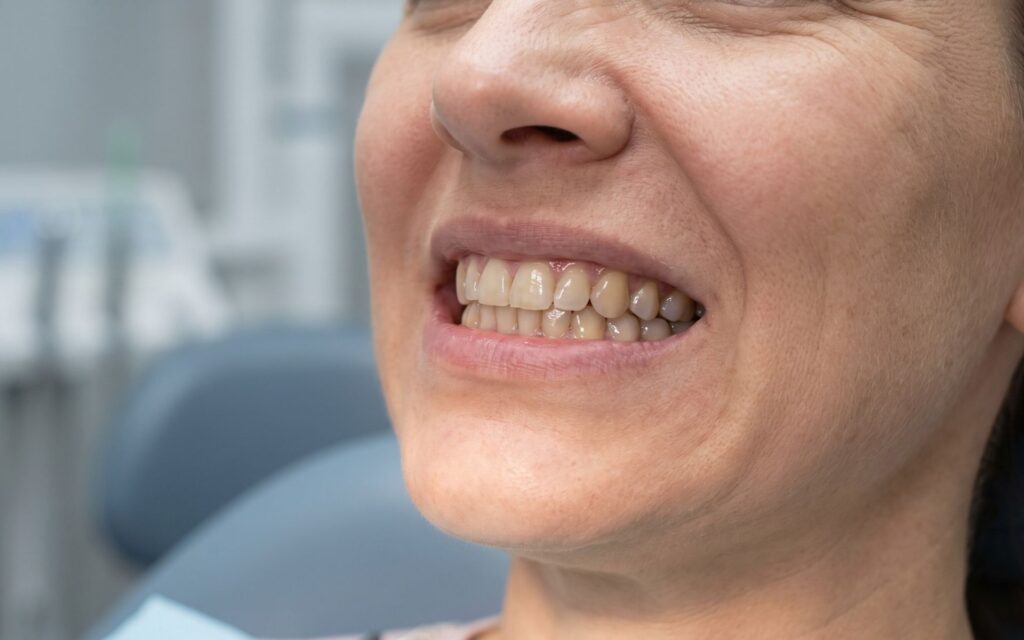
A common (and mistaken) belief is that teeth fall out simply because of aging. In reality, age is not the direct cause of tooth loss. Rather, it increases the duration of exposure to risk factors and conditions such as outdated dental restorations or fillings, periodontal disease, and systemic diseases.
However, with regular checkups, proper oral hygiene, and a healthy lifestyle, it is possible to keep your natural teeth even into old age.
How to Prevent Tooth Loss
Many of the causes of tooth loss can be prevented through proper preventive care and regular checkups.
The main preventive strategies include:
- Thorough daily oral hygiene, including the use of dental floss or interdental brushes
- Regular professional dental hygiene appointments with tartar removal
- Regular checkups for the early diagnosis of gum disease.
A customized prevention program helps limit the buildup of plaque and tartar, keep gum health under control, and identify any problems before they require more complex treatments.
Why You Should Replace a Missing Tooth as Soon as Possible
A missing tooth disrupts the balance of the entire mouth, and the first change affects the bone.
After extraction, the alveolar ridge resorbs rapidly: up to 50% of its width is lost in the first 12 months, and about two-thirds of this reduction occurs within the first 3 months. That is why the timing of treatment matters more than one might think.
Other common consequences include:
- tilting and migration of adjacent teeth toward the empty space
- extrusion of the antagonist—that is, the tooth in the opposite arch that moves downward or upward because it no longer encounters resistance
- changes in occlusion, with possible malocclusions and pain in the temporomandibular joint
- difficulty chewing and excessive stress on the remaining teeth.
Replacing a missing tooth promptly prevents these problems and preserves the bone volume needed forimplant placement, often even with immediate loading. For this reason, it is advisable to schedule a specialist evaluation as soon as possible.
Solutions for Replacing One or More Missing Teeth
The treatment option is chosen based on the number of missing teeth, the condition of the remaining bone, and the health of the adjacent teeth.
- Single system. It replaces a tooth without affecting the adjacent teeth, which remain intact
- Bridge over utility lines. Recommended for cases where several adjacent teeth are missing, it is supported by implants rather than natural teeth.
- Complete Rehabilitation on Implants. Restores an entire dental arch using a specific number of implants to support the fixed prosthesis.
- Overdenture. A removable denture anchored to implants, which is more stable than a traditional denture.
- Immediate Loading. When clinical conditions permit, this allows a temporary prosthesis to be placed within a few hours of surgery [link: fixed teeth in 24 hours].
- Techniques for Reduced Bone Availability. In cases of advanced bone resorption, there are specialized solutions that eliminate or reduce the need for bone grafts.
The decision is made after the examination, based on three-dimensional X-ray imaging and tissue evaluation.
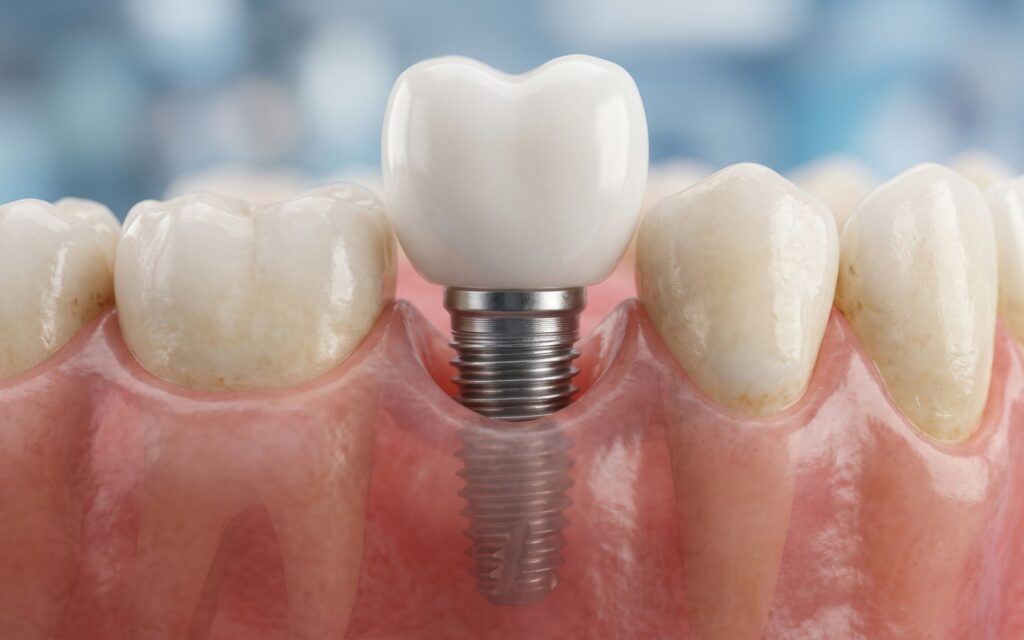
Restoring Function and Aesthetics After Tooth Loss at Centri Dentali Zanardi
The loss of one or more teeth is a condition that can now be addressed with a variety of restorative solutions.
At Centri Dentali Zanardi, every treatment journey begins with a thorough assessment of the clinical situation. Our team recommends the most appropriate solution to restore chewing function, comfort, and the aesthetics of your smile through a personalized treatment plan.
Have you lost one or more teeth, or have you noticed that your teeth are becoming increasingly loose?
Schedule a specialist appointment to determine the most appropriate treatment.